


 By
By Table of Contents
- Why Your Credit Score Actually Matters
- What Are the 5 Factors That Make Up Your Credit Score?
- Payment History
- Amounts Owed (Credit Utilization)
- Length of Credit History
- New Credit Inquiries
- Credit Mix
- How to Improve Your Score Fast
- Final Thoughts
Let’s be real: understanding the 5 factors that make up your credit score is the first step to taking control of your financial life. Checking your credit report can sometimes feel a bit like stepping on a scale after the holidays—it’s stressful, and occasionally, you just want to look away.
But here’s the good news. A great credit score isn’t just a random three-digit lottery or some magic number pulled out of thin air. It’s a highly predictable mathematical formula. If you want to qualify for a mortgage, get the absolute best auto loan rates, or rent your dream apartment without paying extra security deposits, you need to play the game smart. Let’s break down the 5 factors that make up your credit score so you can build a bulletproof financial future.
What Are the 5 Factors That Make Up Your Credit Score?
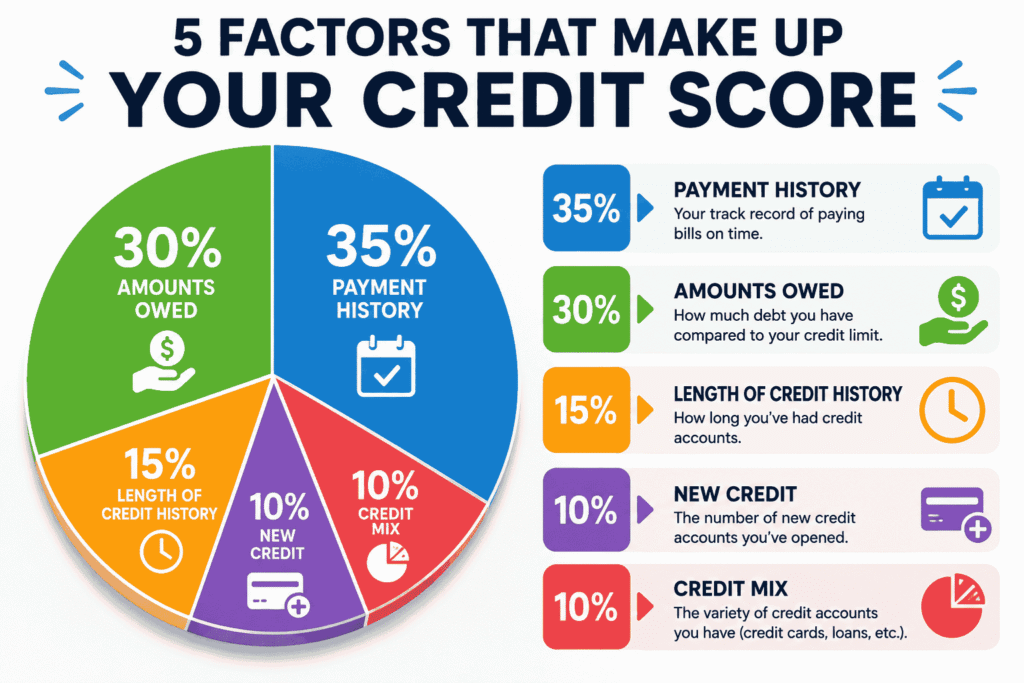
When financial experts talk about the FICO scoring model (External DoFollow Link), they are usually referring to the exact formula behind the magic. Each category of the 5 factors that make up your credit score carries a different mathematical weight. This means some financial mistakes hurt you way more than others. A late payment is definitely worse than opening a new store credit card. Let’s dive into the specifics so you know exactly where to focus your energy.
(Image 2 Suggestion: A colorful, easy-to-read pie chart showing the percentage breakdown of credit score factors.) Alt Text: Pie chart showing the breakdown of credit score factors
1. Payment History (35% of Your Score)
This is the absolute heavyweight champion of your credit report. Simply put, do you pay your bills on time? It sounds basic, but your track record of paying debts back is the ultimate indicator of your financial reliability.
Even a single missed payment—whether it’s a credit card, a student loan, or a medical bill—can cause your score to take a massive nosedive. Lenders want to know they can trust you before handing over thousands of dollars.

2. Amounts Owed / Credit Utilization (30%)
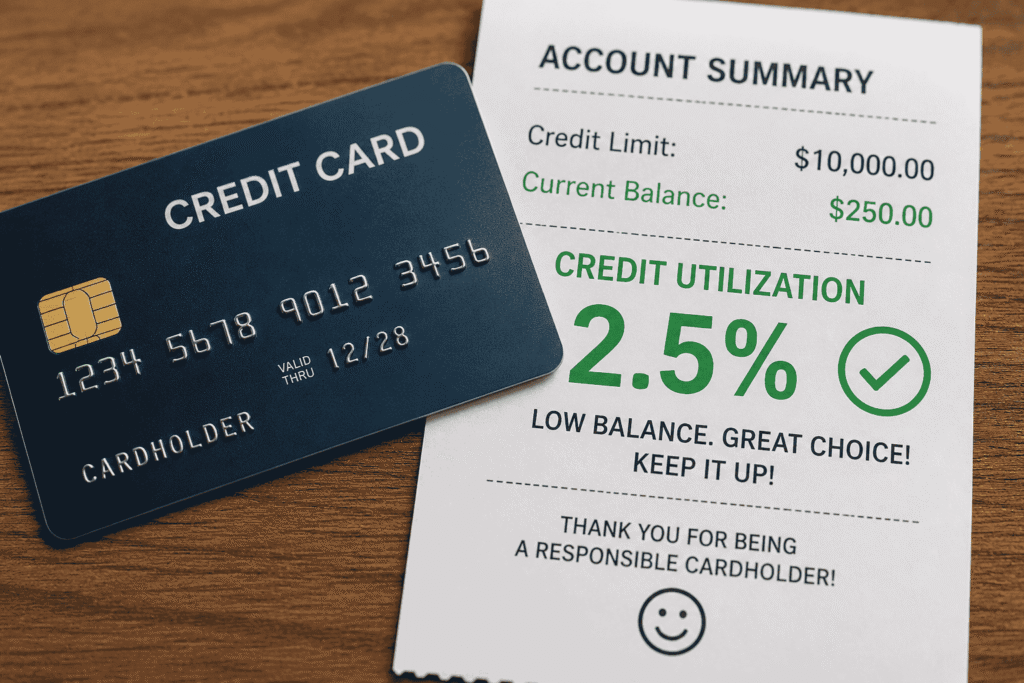
Maxing out your credit cards is a massive red flag, even if you are responsible enough to pay them off in full every single month. This metric looks closely at your “credit utilization ratio”—basically, how much of your available credit limit you’re actually using at any given moment.
Keeping your balances below 30% (and ideally under 10%) is the golden rule for mastering the 5 factors that make up your credit score. The less of your available credit you use, the more trustworthy you look to lenders.
3. Length of Credit History (15%)
Time is genuinely on your side here. Lenders like to see a long, proven track record of responsible borrowing. They look at the age of your oldest account, the age of your newest account, and the average age of all your accounts combined.
This is exactly why closing old, unused credit cards is usually a terrible idea—it suddenly shortens your average account age and dings your score! Keep those old accounts open, even if you rarely use them.

4. New Credit Inquiries (10%)
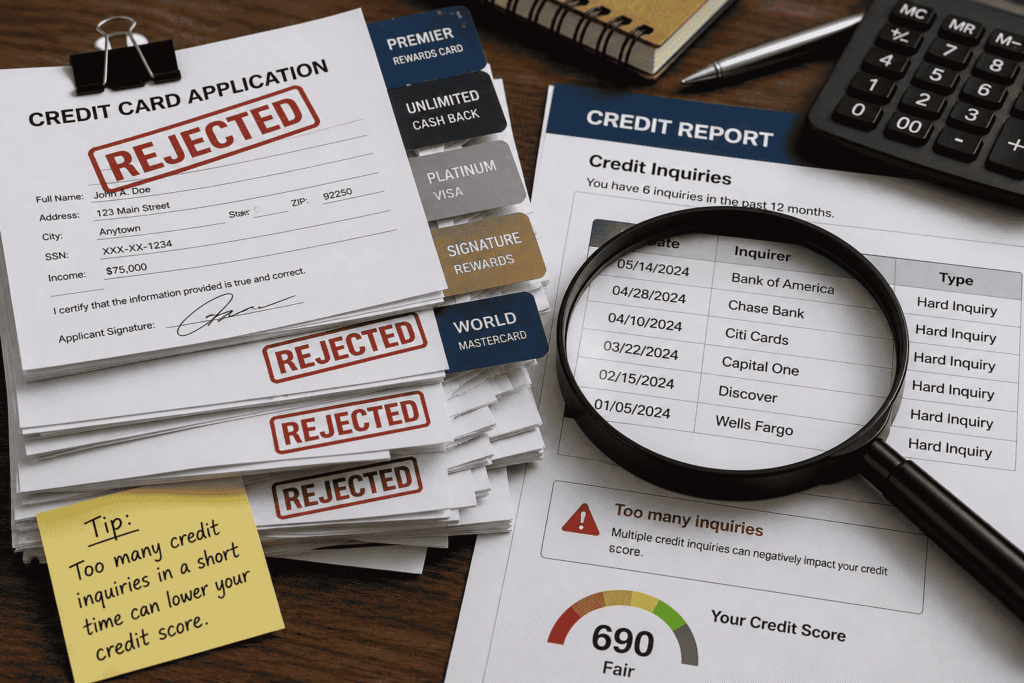
Every time you apply for a new credit card or loan, the lender performs a “hard inquiry” on your report. A few of these won’t ruin your financial life, but applying for a dozen cards in a short period makes you look desperate for cash or financially unstable.
When evaluating the 5 factors that make up your credit score, it is crucial to space out your applications. Only apply for new credit when you truly need it.
5. Credit Mix (10%)
Do you only have a wallet full of credit cards? Lenders actually prefer to see that you can successfully handle different types of debt.
A healthy, diverse mix of revolving credit (like Visa or Mastercard credit cards) and installment loans (like a car loan, student loan, or mortgage) shows you are a versatile and highly reliable borrower. You don’t need to take out a loan you don’t need just to build credit, but a diverse profile definitely helps.

How to Improve Your Score Fast
Now that you know the 5 factors that make up your credit score, what’s the fastest way to see actual results?
- Automate Your Payments: Set up minimum automatic payments so you never miss a due date again.
- Pay Down High Balances: Focus heavily on lowering your utilization ratio. Throw any extra cash at your highest-balance cards.
- Dispute Errors: Check your official reports at AnnualCreditReport.com (External DoFollow Link) and aggressively fight any inaccurate negative marks.
- Become an Authorized User: Ask a trusted family member with stellar credit to add you to their oldest card to inherit their good history.
Final Thoughts
Building excellent credit doesn’t happen overnight, but it’s entirely possible when you know the rules of the road. By staying mindful of the 5 factors that make up your credit score, you can systematically boost your rating, save tens of thousands of dollars in interest over your lifetime, and unlock incredible financial opportunities. Don’t let a mysterious algorithm hold you back from your dreams—take control of your money today and watch that number soar!
5 Factors That Make Up Your Credit Score: Proven Secrets to Unlock Wealthhttps://dollerdepth.com/10-shocking-credit-card-myths-costing-you-money-in-2026/