


 By
By - Table of Contents
- The Great Credit Debate: FICO vs. VantageScore Explained
- The History: Who Created FICO and VantageScore?
- How Are FICO vs. VantageScore Calculated?
- The Mortgage Reality: Which Score Do Lenders Actually Pull?
- Why Your FICO and VantageScore Might Look Completely Different
- How to Check Your FICO vs. VantageScore for Free in 2026
- 7 Proven Ways to Boost Both Scores Before Applying for a Mortgage
- What Happens if Your FICO and VantageScore Are in Different Tiers?
- FICO vs. VantageScore: Which One Matters for Other Types of Loans?
- Common Myths About FICO vs. VantageScore Debunked
- How Often Should You Monitor Your Scores Before Buying a House?
- Expert Verdict: FICO vs. VantageScore for the 2026 Homebuyer
- Introduction Did you know that nearly 65% of prospective homebuyers check the wrong credit score before applying for a mortgage? It is a painful, expensive mistake. You spend years saving for a down payment, only to get hit with a higher interest rate—or worse, a denial—because you didn’t understand the numbers on your screen.
When you log into your favorite free credit monitoring app, you might see a fantastic score and assume you are ready to buy a house. But when the mortgage underwriter pulls your file, they might see a completely different number. Why does this happen? It all comes down to the ultimate financial showdown: fico vs vantagescore.
Understanding the differences between these two scoring models is the single most important step you can take before house hunting in 2026. In this comprehensive guide, we will break down exactly how each score works, why they differ, and most importantly, which one your mortgage lender actually cares about. Let’s make sure you get the best rate possible.
- Key Takeaways
- Mortgage lenders almost exclusively use specific, older versions of the FICO score (FICO 2, 4, and 5), not VantageScore.
- While VantageScore is excellent for free educational monitoring, FICO remains the undisputed king of the mortgage underwriting industry.
- Your FICO and VantageScore can vary wildly due to different weighting formulas, trended data inclusion, and bureau reporting dates.
- Checking your own scores (a soft inquiry) does not hurt your credit, no matter which scoring model you use.
- Mastering the nuances of fico vs vantagescore allows you to strategically boost the exact score your lender will use, saving you thousands in interest.
- Main Article
FICO vs. VantageScore: Which Score Do Lenders Use for Your Mortgage?
The Great Credit Debate: FICO vs. VantageScore Explained
If you have ever applied for a credit card, an auto loan, or a mortgage, you know that a three-digit number dictates your financial life. This number, ranging from 300 to 850, tells lenders how risky it is to lend you money. But here is the catch: you actually don’t just have one credit score. You have dozens of them.
The two main players dominating the US credit landscape are FICO and VantageScore. When consumers ask about fico vs vantagescore, they are usually trying to figure out why the free score they see online doesn’t match the score their bank uses. Both models use the data sitting in your credit reports at the three major bureaus (Equifax, Experian, and TransUnion) to predict the likelihood that you will default on a loan. However, they use entirely different mathematical algorithms to reach their final numbers.
Think of it like two different professors grading the exact same essay. One professor might care heavily about grammar, while the other focuses mostly on the strength of your argument. Both are looking at the same text, but they will hand back different grades. FICO and VantageScore look at your payment history, credit utilization, and account ages, but they weigh those factors differently. For a homebuyer, knowing which “professor” your mortgage lender listens to is the key to locking in a great interest rate.

The History: Who Created FICO and VantageScore?
To truly understand the fico vs vantagescore debate, you need to know a little bit about their origins. FICO is the original giant of the industry. It was created by the Fair Isaac Corporation (now simply FICO) way back in 1956. For decades, FICO had a virtual monopoly on the credit scoring market. If a bank wanted to know if you were a safe bet, they bought a FICO score.
However, the three major credit bureaus—Equifax, Experian, and TransUnion—were not thrilled about paying licensing fees to a third-party company every time a score was generated. So, in 2006, they teamed up to create their own competing model: VantageScore.
VantageScore was designed to be a more modern, consistent alternative. In the early days, FICO and VantageScore scored consumers on completely different ranges, which caused massive confusion. Today, both models use the standard 300 to 850 scale, making them much easier for consumers to compare. But even though they share the same scale, VantageScore has aggressively updated its algorithms (currently on version 4.0) to include alternative data and trended credit information, while the mortgage industry has stubbornly held onto older FICO models. This historical divergence is exactly why your scores look different today.

How Are FICO vs. VantageScore Calculated?
Both scoring models look at the same core data, but the “recipe” they use to bake your score is quite different. Let’s break down the exact percentages and categories each model uses. This is where the fico vs vantagescore comparison gets incredibly interesting for anyone trying to optimize their credit profile.
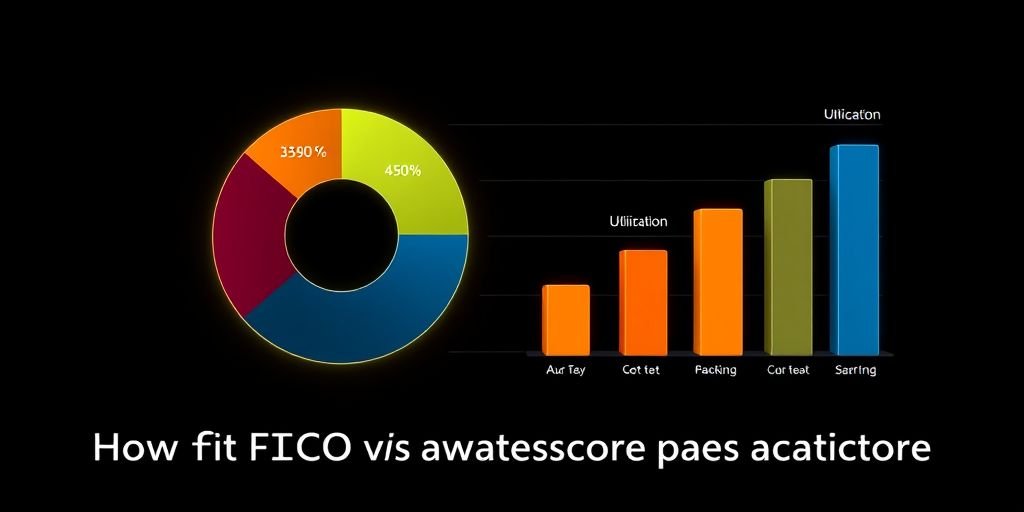
The classic FICO Score (like FICO 8, which is widely used for credit cards and auto loans) uses a very rigid pie chart:
- Payment History: 35%
- Amounts Owed (Utilization): 30%
- Length of Credit History: 15%
- Credit Mix: 10%
- New Credit (Inquiries): 10%
VantageScore, particularly the newer 4.0 model, ditches the strict percentages and instead groups factors by influence levels:
- Extremely Influential: Payment history and credit utilization.
- Highly Influential: Credit age and the types of credit you use.
- Moderately Influential: Total balances and debt.
- Less Influential: Recent credit behavior and hard inquiries.
Expert Tip: VantageScore 4.0 and FICO 10 T both use “trended credit data.” This means they look at how you pay your bills over the last 24 months. Do you pay your credit card in full every month, or do you only make the minimum payment and carry a balance? Even if your utilization is low, carrying a balance can hurt your score in these modern models.
The Mortgage Reality: Which Score Do Lenders Actually Pull?
Here is the most critical section of this entire guide. If you are buying a house in 2026, you can almost completely ignore your VantageScore. Why? Because the mortgage industry is highly regulated and deeply traditional.
When you apply for a mortgage, lenders do not use FICO 8 or VantageScore 4.0. Instead, they use older, highly conservative versions of the FICO score specifically tailored for mortgage lending. Depending on which credit bureau they are pulling from, they will look at:
- Experian: FICO Score 2
- TransUnion: FICO Score 4
- Equifax: FICO Score 5
Lenders pull a “Tri-Merge” credit report, which contains all three of these specific FICO scores. Then, they apply the Middle Score Rule. If your three scores are 720, 740, and 780, the lender uses the middle score (740) to determine your interest rate and loan approval.
Warning: If you are applying for a mortgage with a spouse or co-borrower, the lender will pull all three scores for both of you. They will then take the lowest middle score between the two applicants and use that to price your loan. If your middle score is 790, but your spouse’s middle score is 680, you are getting the 680 interest rate.
Because secondary market investors like Fannie Mae, Freddie Mac, and government agencies like the FHA mandate these specific FICO versions, lenders literally cannot use VantageScore to underwrite your home loan.

Why Your FICO and VantageScore Might Look Completely Different
It is incredibly frustrating to see a 780 VantageScore on your banking app, only to have a mortgage lender tell you your FICO score is a 710. How can a 70-point gap exist on the exact same day? The fico vs vantagescore discrepancy usually boils down to three main culprits.
First, there is the issue of reporting dates. Credit card companies and lenders report your balances to the credit bureaus at different times of the month. If you just paid off a massive credit card balance, but the issuer hasn’t reported that zero balance to Equifax yet, your score on that bureau will still reflect the high debt. Since FICO and VantageScore might be pulling from different bureaus at different times, the scores will mismatch.
Second, VantageScore is generally more forgiving of certain negative items. For example, VantageScore 4.0 ignores paid collection accounts entirely. If you had an old medical bill that went to collections but you paid it off last year, VantageScore acts like it never happened. Older FICO mortgage scores, however, will still count that paid collection against you.
Finally, VantageScore is much more aggressive about including “alternative data.” If you use services that report your rent, utilities, or cell phone payments to the bureaus, VantageScore will happily factor those on-time payments into your score. Traditional mortgage FICO scores largely ignore alternative data, relying strictly on your history with loans and credit cards.
How to Check Your FICO vs. VantageScore for Free in 2026
Monitoring your credit shouldn’t cost you a dime. Thanks to federal regulations and market competition, you have plenty of ways to check your scores for free. But you need to know which service provides which score.
If you want to check your VantageScore, the easiest route is through free credit monitoring services. Companies like Credit Karma, Credit Sesame, and even many major banks (like Chase and Capital One) provide free VantageScore 3.0 or 4.0 updates weekly or monthly. These are fantastic for tracking your general credit health and spotting identity theft.
If you want to check your FICO Score, you need to look elsewhere. Many banks and credit unions (such as Bank of America, Discover, and Ally) offer free FICO Score 8 updates to their customers. You can also purchase your specific FICO scores directly from myFICO.com.
Pro Tip: By federal law, you are entitled to a free credit report (the detailed history of your accounts, not the score itself) from all three bureaus every single week via AnnualCreditReport.com. The Consumer Financial Protection Bureau (CFPB) highly recommends pulling these reports at least once a year to check for errors.

7 Proven Ways to Boost Both Scores Before Applying for a Mortgage
Whether you are trying to move the needle on your FICO or VantageScore, the foundational habits of good credit remain the same. If you have six to twelve months before you apply for a mortgage, follow these seven actionable steps to maximize your approval odds.
- Pay Down Revolving Debt (The AZEO Method): Credit utilization is the second most important factor in your score. To get the absolute highest FICO score possible, use the “All Zero Except One” (AZEO) method. Pay all your credit cards down to $0, except for one card. Leave a tiny balance (like $10) on that one card before the statement closing date. This shows you use credit responsibly but aren’t reliant on it.
- Dispute Inaccurate Late Payments: A single 30-day late payment can tank your score by 50 to 100 points. Review your AnnualCreditReport.com files carefully. If you see a late payment that was actually paid on time, file a dispute with the bureau immediately. The FTC provides excellent templates for these dispute letters.
- Become an Authorized User: Ask a family member with a flawless credit history and a high-limit, low-balance credit card to add you as an authorized user. That card’s positive history will “piggyback” onto your credit report, boosting your average age of accounts and lowering your overall utilization.
- Do Not Close Old Accounts: You might think closing a paid-off credit card is responsible, but it actually hurts your score. Closing a card reduces your total available credit (spiking your utilization) and eventually shortens your credit history length. Keep old cards open and use them for a small subscription like Netflix to keep them active.
- Use Experian Boost: This free service allows you to connect your bank account and get credit for paying your utility bills, phone bills, and streaming services on time. It can instantly bump up your FICO Score 8, though it won’t impact your mortgage FICO scores.
- Limit Hard Inquiries: Every time you apply for a new credit card or auto loan, a hard inquiry hits your file, dropping your score by a few points. In the 12 months leading up to a mortgage application, freeze your credit and avoid applying for any new financing.
- Automate Your Payments: The simplest way to protect your payment history is to set up autopay for the minimum amount due on every single account. This acts as a safety net so you never accidentally miss a due date while you are busy house hunting.
What Happens if Your FICO and VantageScore Are in Different Tiers?
Credit scores are grouped into “tiers” that dictate the interest rates you receive. For example, a score of 760+ gets you the absolute best “par” pricing on a mortgage. A score between 700 and 759 gets you a slightly higher rate, and anything below 680 starts to get expensive.
Let’s look at a real-world 2026 scenario. Imagine your VantageScore is a beautiful 775, putting you firmly in the top tier. But because of an old medical collection that VantageScore ignores but FICO counts, your middle FICO score is sitting at 695.
When you sit down with the loan officer, they will use the 695. You will be placed in a lower pricing tier, which could cost you an extra 0.25% to 0.50% on your interest rate. On a $400,000 mortgage, a 0.50% higher rate costs you roughly $45,000 in extra interest over 30 years.
If you find yourself in this situation, you must delay your home purchase and focus entirely on fixing the specific issues dragging down your FICO score. Negotiate a “pay for delete” with collection agencies, or wait for negative items to age off your report. Never assume your VantageScore will save you at the closing table.

FICO vs. VantageScore: Which One Matters for Other Types of Loans?
While mortgages are strictly a FICO game, the fico vs vantagescore debate changes depending on what else you are financing.
Auto Loans: Car dealerships and auto lenders usually use specialized FICO Auto Scores. These are variations of the FICO score that place extra weight on your past history of paying off car loans. If you have a perfect history with auto loans but a few missed credit card payments, your FICO Auto Score will be much higher than your classic FICO 8. Some modern fintech auto lenders might use VantageScore, but traditional dealerships stick to FICO.
Credit Cards: This is where VantageScore shines. Many major credit card issuers use VantageScore or FICO 8 for instant approval decisions. Because credit cards are unsecured debt and the risk is lower, issuers are more willing to use newer, more inclusive scoring models. If you are just applying for a new rewards card, your free VantageScore from Credit Karma is usually a very accurate indicator of whether you will be approved.
Personal Loans: Online lenders and peer-to-peer platforms frequently use VantageScore because it is cheaper for them to license than FICO. If you are taking out a small personal loan for home renovations, VantageScore is highly relevant.

Common Myths About FICO vs. VantageScore Debunked
The internet is full of terrible credit advice. Let’s clear up the most common myths surrounding the fico vs vantagescore models so you don’t accidentally sabotage your mortgage application.
- Myth 1: Checking your own score lowers it.
- The Truth: As mentioned earlier, checking your own credit is a “soft pull.” It has absolutely zero impact on your FICO or VantageScore. You should check it weekly if you want to.
- Myth 2: You need to carry a balance to build credit.
- The Truth: This is a lie perpetuated by credit card companies who want to collect interest. You do not need to carry a balance or pay a single penny in interest to get an 850 FICO score. Simply using the card for groceries and paying the statement balance in full every month is perfect.
- Myth 3: Closing a card you don’t use helps your score.
- The Truth: Closing a card reduces your total available credit limit. If you have $10,000 in total limits and $2,000 in debt, your utilization is 20%. If you close a card and drop your total limit to $5,000, your utilization instantly spikes to 40%, tanking your score.
- Myth 4: Paying off an old collection removes it from your report.
- The Truth: Paying a collection changes its status to “Paid Collection,” but it does not delete the negative history. The account will still sit on your FICO report for seven years from the date of the first delinquency, continuing to hurt your mortgage score.

How Often Should You Monitor Your Scores Before Buying a House?
Timing is everything in real estate. You shouldn’t just check your score the week before you call a real estate agent. Here is a professional timeline for monitoring your fico vs vantagescore profiles.
12 Months Out: Pull your full credit reports from AnnualCreditReport.com. Look for any glaring errors, identity theft, or old collections. This gives you a full year to dispute errors and negotiate pay-for-deletes with collection agencies, which can take months to process.
6 Months Out: Start aggressively paying down credit card balances to optimize your utilization. Stop applying for any new credit. Check your FICO Score 8 via your bank or myFICO to see where your baseline is.
3 Months Out: Implement the AZEO (All Zero Except One) method. Check your scores weekly to ensure no new errors have popped up and that your creditors are reporting your zero balances to the bureaus.
The Day of Application: Do not make any large purchases, do not open new store credit cards for furniture, and do not move large sums of undocumented cash into your bank account. Keep your credit profile completely frozen until the keys are in your hand.
Expert Verdict: FICO vs. VantageScore for the 2026 Homebuyer
When it comes down to it, the fico vs vantagescore debate isn’t really a competition; it’s a matter of using the right tool for the right job. VantageScore is a fantastic, modern, consumer-friendly tool that gives you a great snapshot of your overall financial health. It is perfect for spotting fraud, tracking your progress, and applying for everyday credit cards.
But when it is time to make the biggest purchase of your life, FICO is the only boss you need to impress. Mortgage lenders rely on the conservative, time-tested algorithms of FICO 2, 4, and 5 to protect their investments and satisfy federal regulators.
Don’t let a shiny VantageScore give you a false sense of security. Dig deep, find out what your specific FICO mortgage scores are, and focus all your energy on optimizing those numbers. By understanding the rules of the game, you will save yourself thousands of dollars and secure your dream home with confidence.

- Comparison Tables
FICO vs. VantageScore: Core Feature Comparison
| Feature | FICO Score (Classic & Mortgage) | VantageScore (3.0 & 4.0) |
|---|---|---|
| Creator | Fair Isaac Corporation (1956) | Equifax, Experian, TransUnion (2006) |
| Primary Use | Mortgages, Auto Loans, Credit Cards | Free Credit Monitoring, Credit Cards, Fintech |
| Score Range | 300 to 850 | 300 to 850 |
| Minimum Data Needed | At least one account open for 6 months | At least one account reported in the past 24 months |
| Paid Collections | Older FICOs count them; FICO 9 ignores them | VantageScore 3.0 and 4.0 ignore them entirely |
| Trended Data | Only FICO 10 T uses it (not used for mortgages) | VantageScore 4.0 heavily utilizes trended data |
| Mortgage Lending | The undisputed industry standard | Rarely, if ever, used for mortgage underwriting |
The Mortgage FICO Score Breakdown
| Credit Bureau | Mortgage FICO Version Used |
|---|---|
| Experian | FICO Score 2 |
| TransUnion | FICO Score 4 |
| Equifax | FICO Score 5 |
- FAQ
Do mortgage lenders look at VantageScore at all? Generally, no. When you apply for a mortgage, lenders almost exclusively rely on specific versions of the FICO score, such as FICO Score 2, 4, or 5. While VantageScore is an excellent educational tool and widely used by free credit monitoring apps, the mortgage industry has standardized on FICO models to assess risk. The Federal Reserve and secondary market investors like Fannie Mae and Freddie Mac require these specific FICO versions for loan underwriting. Therefore, if you are house hunting, you should focus entirely on your FICO profiles rather than your VantageScore.
Why is my VantageScore 50 points higher than my FICO score? This is incredibly common and usually boils down to different scoring formulas and data reporting times. VantageScore models, especially newer versions like 4.0, often weigh certain factors differently and may include trended credit data or alternative data like rent payments. FICO mortgage scores, on the other hand, use older, more conservative algorithms that strictly evaluate your traditional credit history. Additionally, if a recent credit card balance hasn’t updated on the bureau that FICO is pulling from, the scores will temporarily diverge.
Does checking my own credit score hurt my FICO or VantageScore? Absolutely not. Checking your own credit is considered a “soft inquiry” or “soft pull,” which has zero impact on both your FICO and VantageScore. The Consumer Financial Protection Bureau (CFPB) actively encourages consumers to monitor their credit regularly. Your score only takes a minor, temporary hit when a lender performs a “hard inquiry” after you formally apply for a new loan or credit card. You should check your scores as often as you like without worrying about damaging your mortgage approval chances.
Which score should I focus on improving first before buying a house? You should always prioritize improving your FICO score, specifically the versions used in mortgage lending (FICO 2, 4, and 5). Since mortgage lenders use the “middle score” rule, you need to identify which of your three FICO scores is the lowest and work on boosting it. Paying down revolving credit card balances, disputing any inaccurate late payments, and avoiding new hard inquiries are the fastest ways to move the needle. Remember, in the fico vs vantagescore debate for real estate, FICO is the only one that dictates your interest rate.
Can I use VantageScore to negotiate a better mortgage rate? Unfortunately, no. Mortgage underwriters are bound by strict secondary market guidelines from Fannie Mae, Freddie Mac, and government agencies like the FHA and VA. These entities mandate the use of specific FICO scoring models to determine your risk tier and interest rate. Even if you show a loan officer a perfect 850 VantageScore, they cannot legally use it to price your loan. Your best strategy is to use VantageScore for general credit health monitoring, but rely on your FICO scores for actual mortgage negotiations and rate locks.
- Conclusion Buying a home is a massive milestone, and you shouldn’t let a confusing three-digit number stand in your way. As we have explored in this deep dive into fico vs vantagescore, the secret to getting the best mortgage rate isn’t about having a perfect score everywhere—it’s about having the right score where it counts.
While VantageScore is a wonderful tool for everyday credit monitoring, FICO remains the undisputed heavyweight champion of the mortgage industry. By understanding the middle score rule, optimizing your credit utilization, and avoiding common credit myths, you can take total control of your financial narrative. Don’t leave your interest rate to chance. Check your mortgage-specific FICO scores, clean up your reports, and step into the 2026 housing market with absolute confidence. Your dream home is waiting, and now you have the financial blueprint to get the keys.
- Next Steps CTA
Next Steps
Ready to take full control of your financial future? Don’t stop here! The housing market in 2026 is competitive, but with the right knowledge, you can secure a deal that builds generational wealth.
- Read More on DollarDepth: Check out our deep dives on [How to Save for a Down Payment Fast], [The First-Time Homebuyer Mistakes to Avoid], and [How to Refinance Your Mortgage in 2026].
- Join the Community: Subscribe to the DollarDepth Weekly Newsletter to get our exclusive credit-boosting checklists, interest rate updates, and expert real estate tips delivered straight to your inbox every Monday. Let’s build your wealth together!
- Internal Link Suggestions
- Anchor Text: how to save for a down payment fast
- Target Article Idea: 10 Smart Ways to Save for a House Down Payment in 2026
- Anchor Text: first-time homebuyer mistakes to avoid
- Target Article Idea: 7 Costly First-Time Homebuyer Mistakes That Kill Your Mortgage Approval
- Anchor Text: how to refinance your mortgage in 2026
- Target Article Idea: The Ultimate Guide to Mortgage Refinancing: Is 2026 the Right Time?
- External References
- Consumer Financial Protection Bureau (CFPB): How to dispute credit report errors (DoFollow) – Use for understanding the legal rights to dispute inaccurate credit data.
- Federal Trade Commission (FTC): Free Credit Reports (DoFollow) – Use for federal guidelines on accessing and protecting your credit identity.
- Federal Reserve Board: Consumer Credit – G.19 (DoFollow) – Use for macroeconomic data on US consumer credit trends and lending standards.
- USA.gov: Credit scores and reports (DoFollow) – Use as a foundational government resource explaining the basics of the US credit system.